Cape Creek Bridge


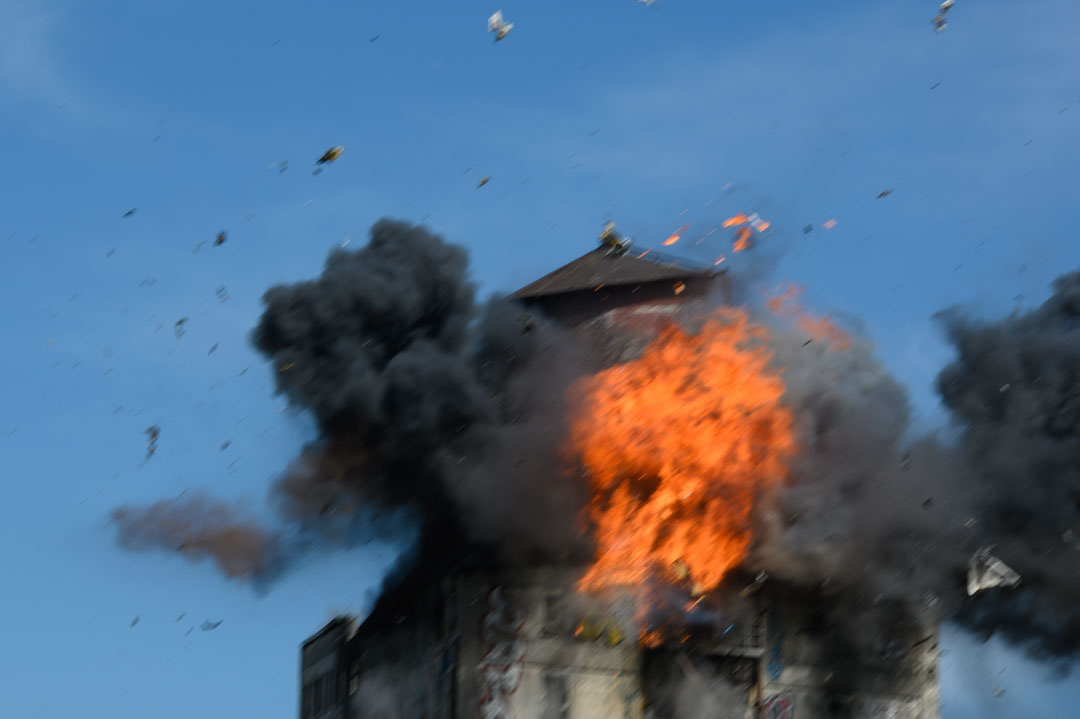
On May 21, 2006, at 7:00 a.m., the 499-foot concrete hourglass-shaped cooling tower at Trojan Nuclear Power Plant near Rainier, Oregon, crashes to the ground.
For me, it was two things: an end of an era, and it changed the way I do photography.
The Trojan Nuclear Power Plant ,owned by Portland General Electric, was permanently closed in 1992. The site sat silent for nearly 17 years until the dismantling process started in 2005. Nothing drew a crowd more than the event on May 21, 2006—demolishing the cooling tower.

For me, however, my photographing experience was about to take a turn for the worst. Throughout the morning, I had been photographing the tower and the scene. I also set up an analog Hi-8 video camera as a backup.
Around 6:58 a.m. PDT, I took a test shot. The image turned out dark. The EXIF data wasn’t recording. The shutter wasn’t releasing. I changed out batteries and lenses. Nothing. I had one camera body at the time and it failed.
7:00 a.m. PDT, as I was reaching into my camera bag, I heard a shouts and cheering, I jump up, bumping into my video camera, and watched dust blow from the tower as it crumbles to the ground.
Then the loud boom.
It was this experience that convinced me to have two camera bodies ready, in case one fails.
For the one guy who yelled, “Do it again,” yes, please! I need a re-shoot!

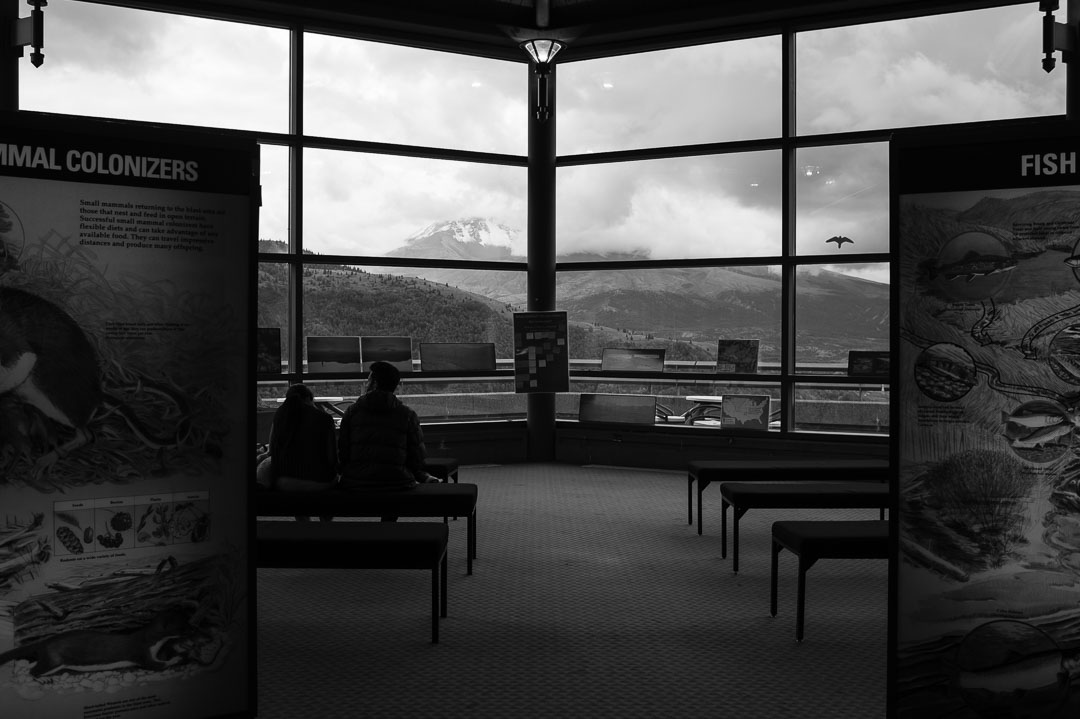
Today marks the 46th anniversary of Mt. St. Helens eruption.
On Sunday, May 18, 1980, at 8:32 a.m. Pacific Time, the north flank of Mt. St. Helens collapses and a violent blast of hot ash from the mountain scorches and levels the old-growth forest. The hot ash also melts the snow and glaciers, creating a torrential lahar down the Toutle River, destroying homes and bridges in its path. Fifty-seven people were killed in the eruption.
I was 5 years old when the Mountain erupted on May 18, 1980. I recall watching the eruption from Vancouver, Washington, and seeing the dark gray ash plume tower into the sky.

The first Mt. St. Helens eruption I captured was in 2004 from Windy Ridge. On October 1, 2024, Mt. St. Helens started erupting around noon time. A swarm of earthquakes were rumbling inside the mountain late September 2004. This would be the start of the 2004-2008 eruption, where a second lava dome started building inside the crater south of the original lava dome.

A vacant building, a Post Office, and a pub walk into a bar… How does that work when one of the buildings is actually a bar?
Anyway, I love the trio of simple vintage rural buildings lined-up along the street in Pe Ell, Washington. I’d like to know what the boarded-up building on the left used to be.

This is my first time visiting Neskowin Beach on the Oregon coast. I learned about this beach after watching a video about the “ghost forests” of Washington and Oregon. Today, I went out to check out the beach. .
When you go to Neskowin Beach, you’re best off to go when the tide is low. You can view the stumps of the ghost forest (this also greatly depends on the sand level), a 360-view of Proposal Rock, and the cave inside the south side of Proposal Rock.
With private lands dominating the south beach, the preferred access is from the Neskowin Beach Sate Recreation Site. Neskowin Creek slices down the beach and into the Pacific Ocean. You may want to bring waders or other footwear you don’t mind getting wet, or just go barefoot. The creek is about a foot to foot and a half deep, but with rushing current.
Barnacles cover the lower rim on Proposal Rock. There is an arch-like feature and a cave on the south side of the rock. The cave goes back about 25 feet, but can be submerged at high tide. Best to avoid the cave when the tide is rising or if there is a sneaker wave warning in effect.
I plan to revisit Neskowin Beach in the near future with some beach footwear. I also hope that the beach sand on the south beach may wash out to expose more ghost forest stumps (the same effect happens with the Peter Iredale shipwreck northward up the coast, where more of the ship’s ribs are exposed).
And now, for the photos:

Today, I said goodbye to the original TriMet MAX Type 1 light rail train. Car 124 was the farewell car. The Type 1 train went into service with the original Portland-Gresham line on September 5, 1986.
Almost 40 years later, most Type 1 trains have been retired and recycled, except for car 101, which was preserved and donated to the Oregon Electric Railway Museum in Brooks, Oregon.
I remember the first time I rode the MAX. The cars didn’t have air-conditioning, so the split windows were the only way to keep cool while zipping along the Banfield Freeway. In the late 1990s, the Type 1 trains were retrofitted with air-conditioning and solid windows.
The Type 1’s high floor forced passengers in wheel chairs to use a special external lift. Stop times were a little longer, because the operator had to leave the train and operate the external lift. The low floor Type 2 trains were introduced in 1997 and similar Type 3 trains in 2003. The low floor trains with a built-in passenger-activated gap ramp meant that the external lifts were no longer required and removed from the Portland-Gresham line stations.
Today’s farewell event was a festive one. Hundreds of people showed up to take photos in the operator’s cab, post a farewell note and sign the train, buy merch, and grab a pizza and a doughnut from the food trucks.
I wrote on car 124: “Farewell, Type 1. 1986-2026,” and signed my name on a window pillar. I later took a selfie from the cab.
The Type 1 MAX train had a long and good run.
And now, here are my photos:

I’ve been neglecting my website. My photos that I take sit inside a hard drive. My stories that I could tell sits siloed in my head. My stories and photos are not getting out onto my website.
Much of my time has been spent on social media. Social media has decayed into something far less than social and more toxic over the past several years. Today, social media is flooded with sponsored or promoted posts, AI slop, and bots, making my social media experience frustrating and time-wasting. I feel that brain rot coming on and I’m not getting any younger.
I miss blogging. I’m ready to get back to blogging. Blogging was a way for me to go out, explore locations or events, learn something about it, and coming back to share it on my website. I do it for my enjoyment, so I’m not concerned about analytics, likes, and follower counts. (I’m still sticking to Bluesky as my social media platform.)
And now, it’s time to dust off my website, start fresh again, and stick to this path.